
E-Commerce Website Development in Andheri East
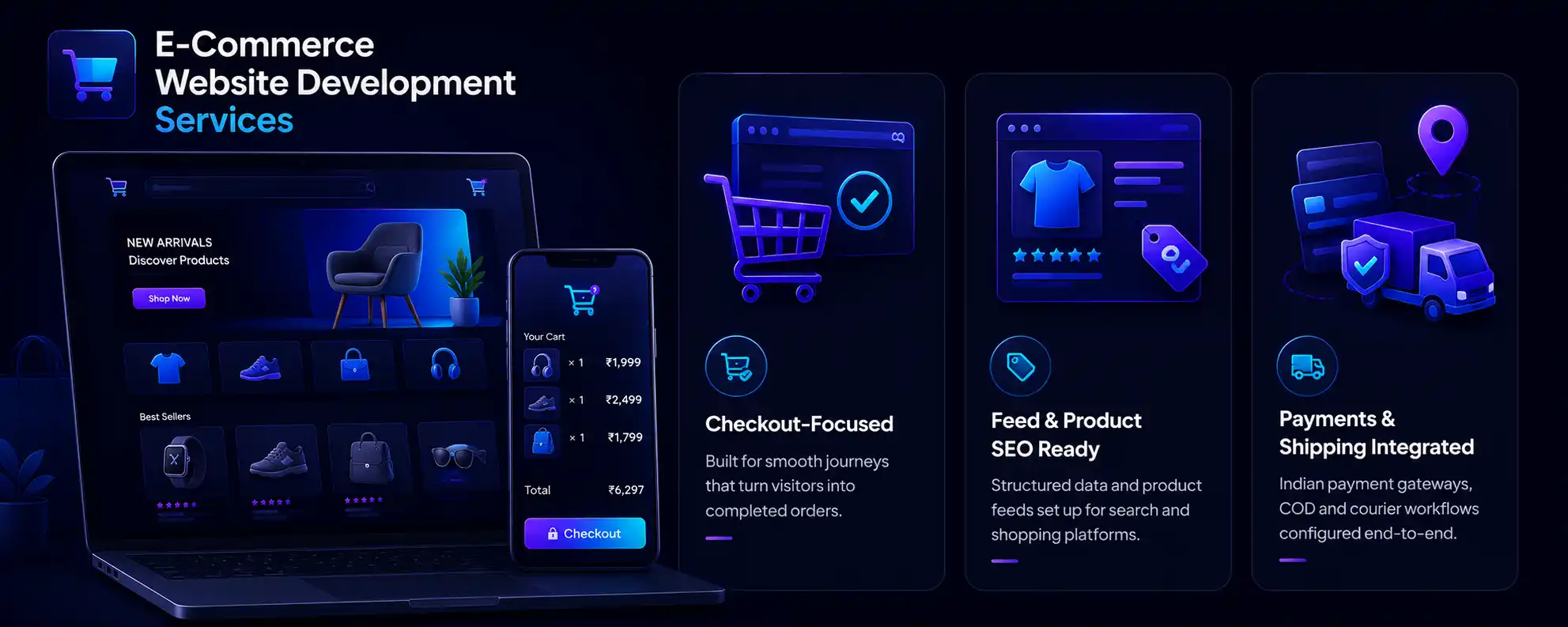
Ktech Media Solutions provides e-commerce website development services for brands selling online. We build stores that load quickly, guide people to checkout without friction, and carry the product structure and tracking that search and advertising platforms need to perform. Looking for e-commerce website development in Andheri East? We build online stores with clean checkout, payments and product SEO built in, for Andheri East and Mumbai-wide brands. For the full national picture, see our e-commerce website development services page.
What Is E-Commerce Development?
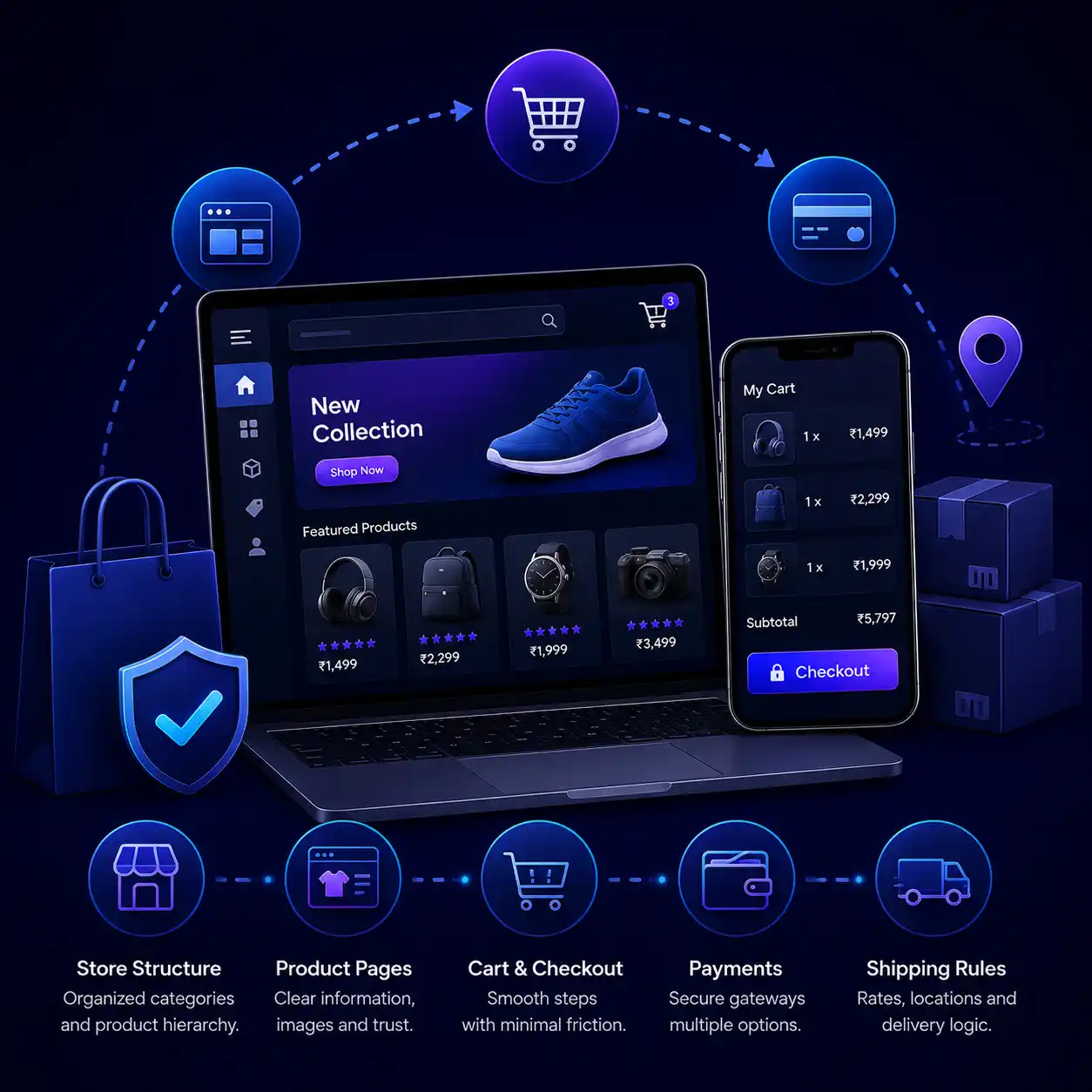
E-commerce development is building the store itself — catalogue structure, product pages, cart, checkout, payments, shipping rules and the integrations behind them. It differs from a normal website because every additional step between interest and payment costs you orders.
Why Does Store Quality Matter?
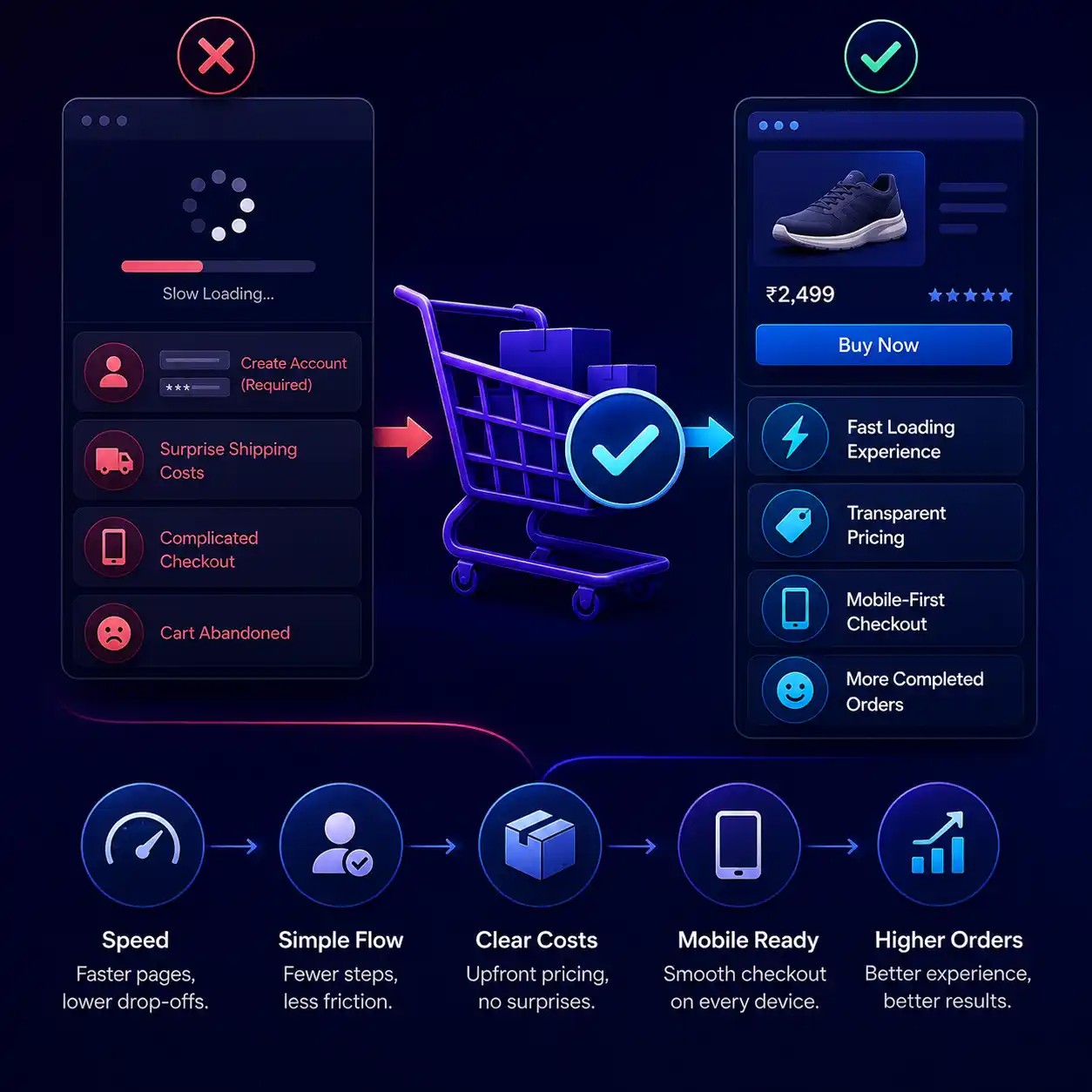
Because abandonment is the default. Most people who add to cart never complete the order, and slow pages, forced account creation, surprise shipping costs and awkward mobile checkout are among the biggest reasons. Fixing those is usually cheaper than buying more traffic.
What Does an E-Commerce Agency Do?
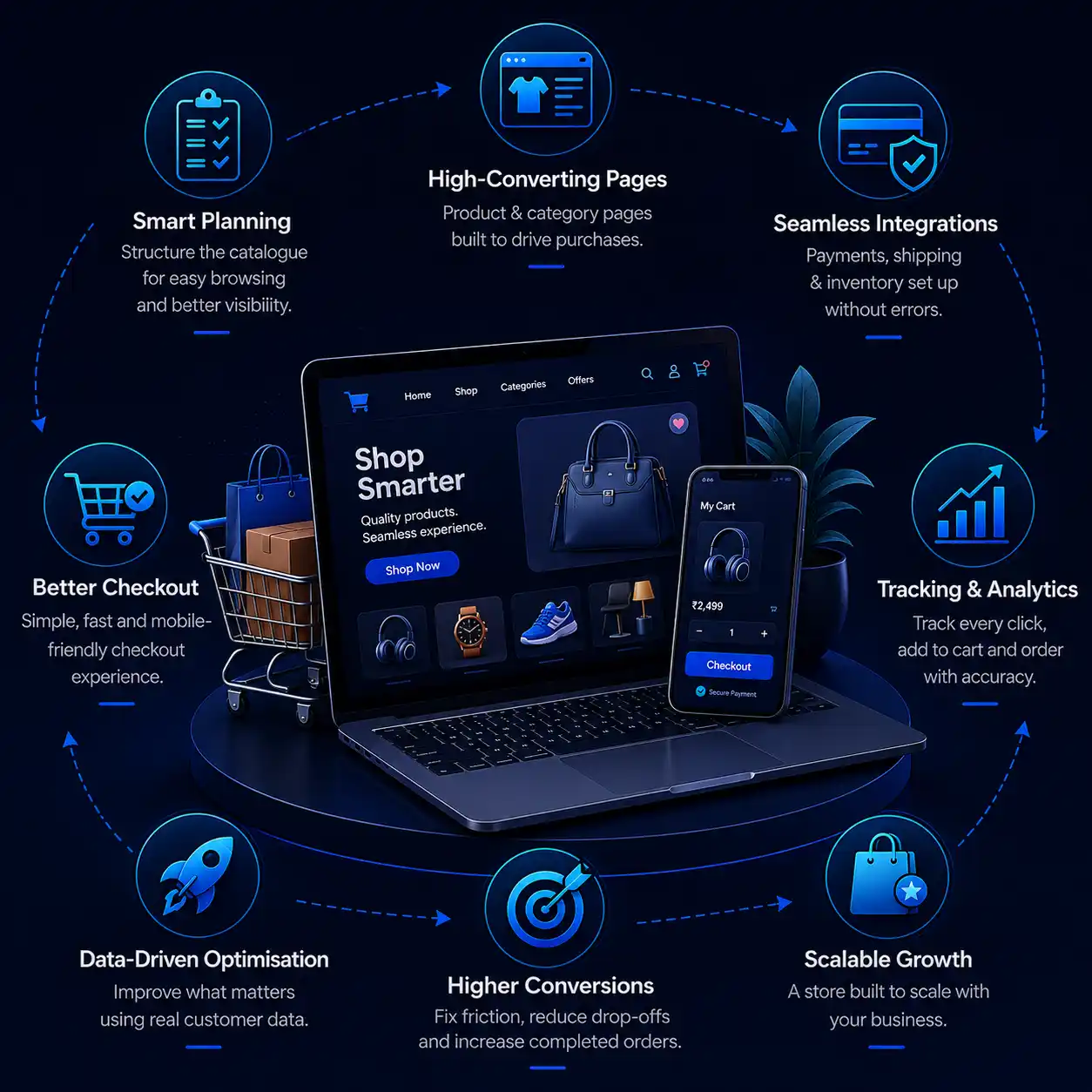
Plan the catalogue so it can be browsed and crawled, build product and category pages that sell, integrate payment and shipping correctly, and set up the tracking that advertising needs. Then keep improving checkout against real data.
E-Commerce Development for Andheri East's Manufacturers & Exporters
Manufacturers and exporters around Andheri East increasingly need online ordering — a B2B catalogue store with bulk pricing and account-based ordering, rather than a typical consumer checkout flow.
For businesses here, e-commerce development usually means building around wholesale logic — minimum order quantities, tiered pricing, account approval — that standard consumer store templates don't handle out of the box.
Our E-Commerce Development Services
An online store has more moving parts than a standard website — inventory, payments, shipping, returns and tax all interact, and a mistake in any of them shows up as lost orders.
We build stores that handle those properly, then keep improving the path to checkout once real traffic arrives.
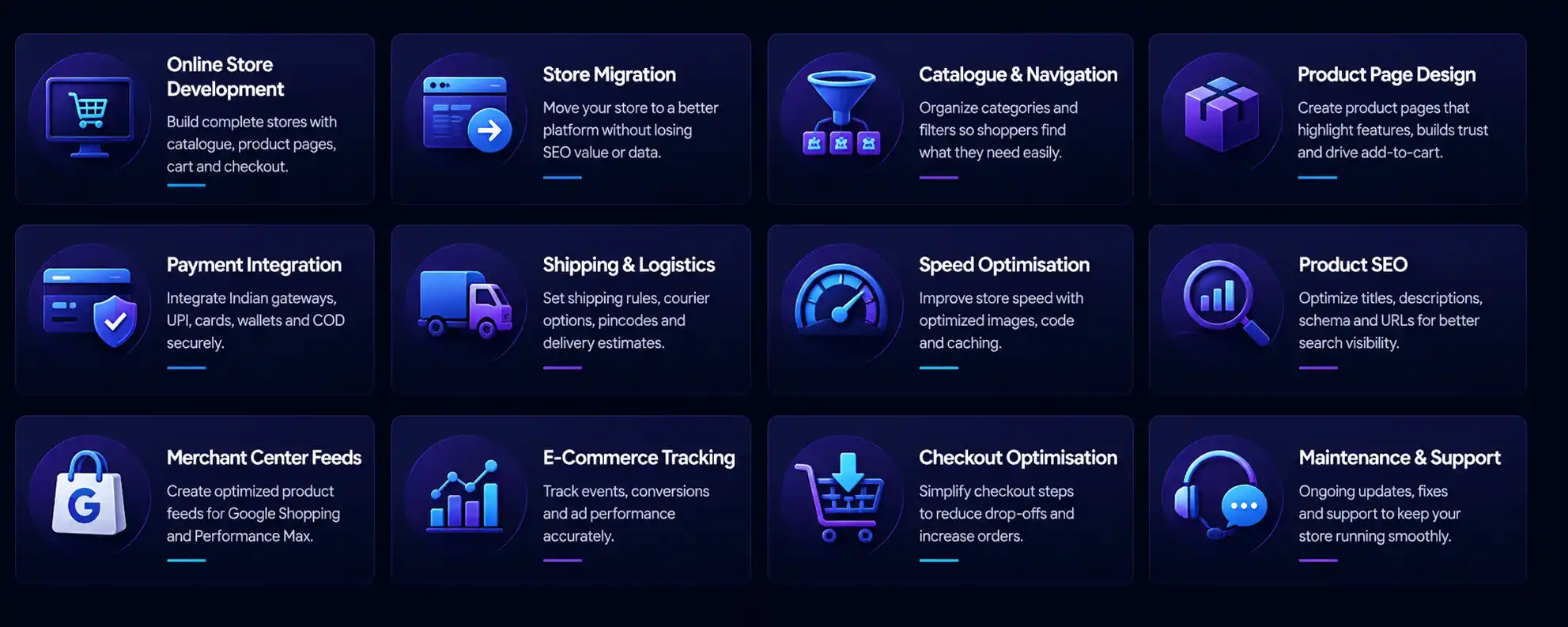
Online Store Development
Complete store builds covering catalogue, product pages, cart and checkout.
Store Migration
Moving from an existing platform without losing SEO value, order history or product data.
Catalogue & Navigation
Category structure, filtering and search that shoppers can use and search engines can crawl.
Product Page Design
Layouts built around images, specifications, reviews and a clear add-to-cart action.
Payment Integration
Indian payment gateways, UPI, cards, wallets and cash on delivery configured and tested.
Shipping & Logistics
Courier integration, shipping rules, serviceable pin codes and delivery estimates.
Speed Optimisation
Image handling and loading strategy tuned for catalogues, where page weight grows quickly.
Product SEO
Category and product optimisation, product schema and clean URLs that support organic visibility.
Merchant Center Feeds
Product feeds structured for Google Shopping and Performance Max campaigns.
E-Commerce Tracking
GA4 e-commerce events, purchase conversions and ad platform tags verified end to end.
Checkout Optimisation
Reducing the steps, fields and surprises between add-to-cart and completed payment.
Maintenance & Support
Ongoing updates, monitoring and fixes, since a broken checkout costs money by the hour.
What Makes an Online Store Convert?
Traffic is the easy part. These five things decide how much of it turns into completed orders:
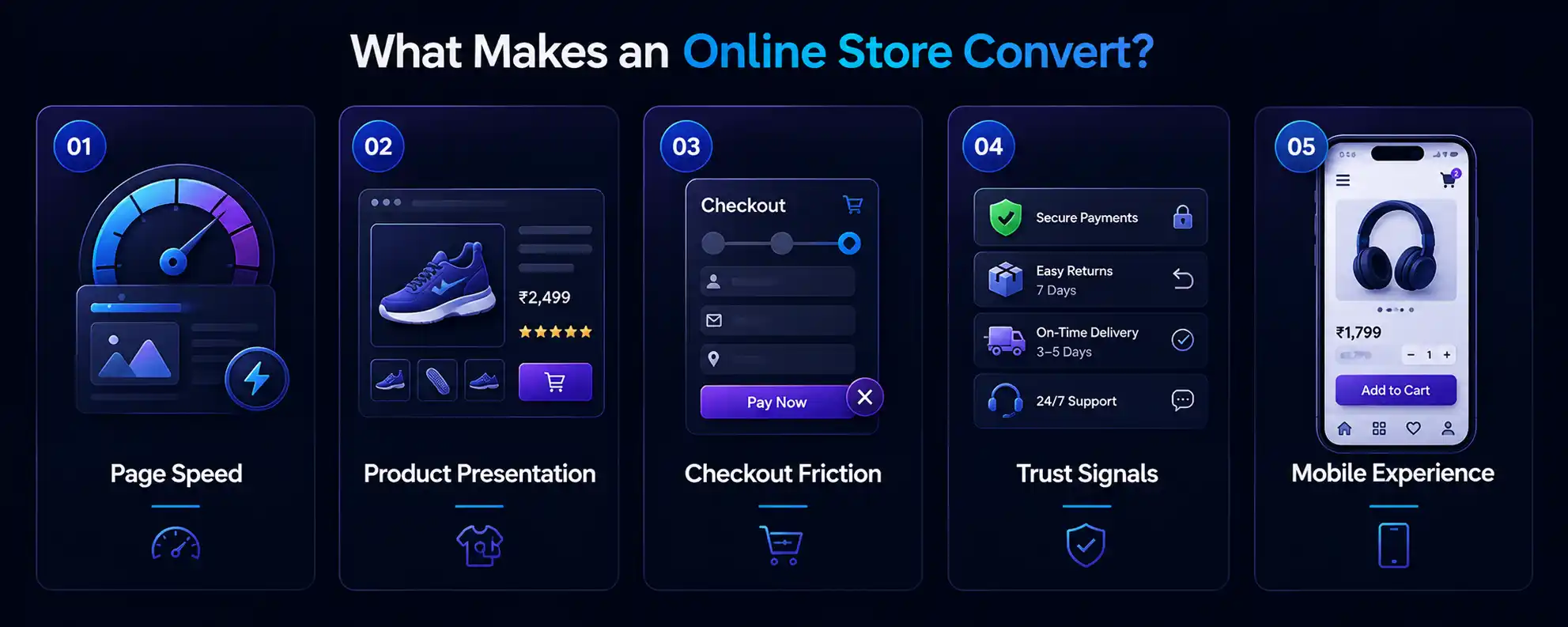
Page Speed
Catalogue pages are image-heavy by nature. Without careful handling they become slow, and slow stores lose shoppers.
Product Presentation
Clear images, honest specifications and visible reviews answer the questions that otherwise cause hesitation.
Checkout Friction
Every extra field, forced account creation or unexpected charge at the final step costs completed orders.
Trust Signals
Return policy, delivery timelines, secure payment indicators and real contact details, shown before checkout.
Mobile Experience
Most shopping traffic is mobile. If checkout is awkward on a phone, that is where the orders are lost.
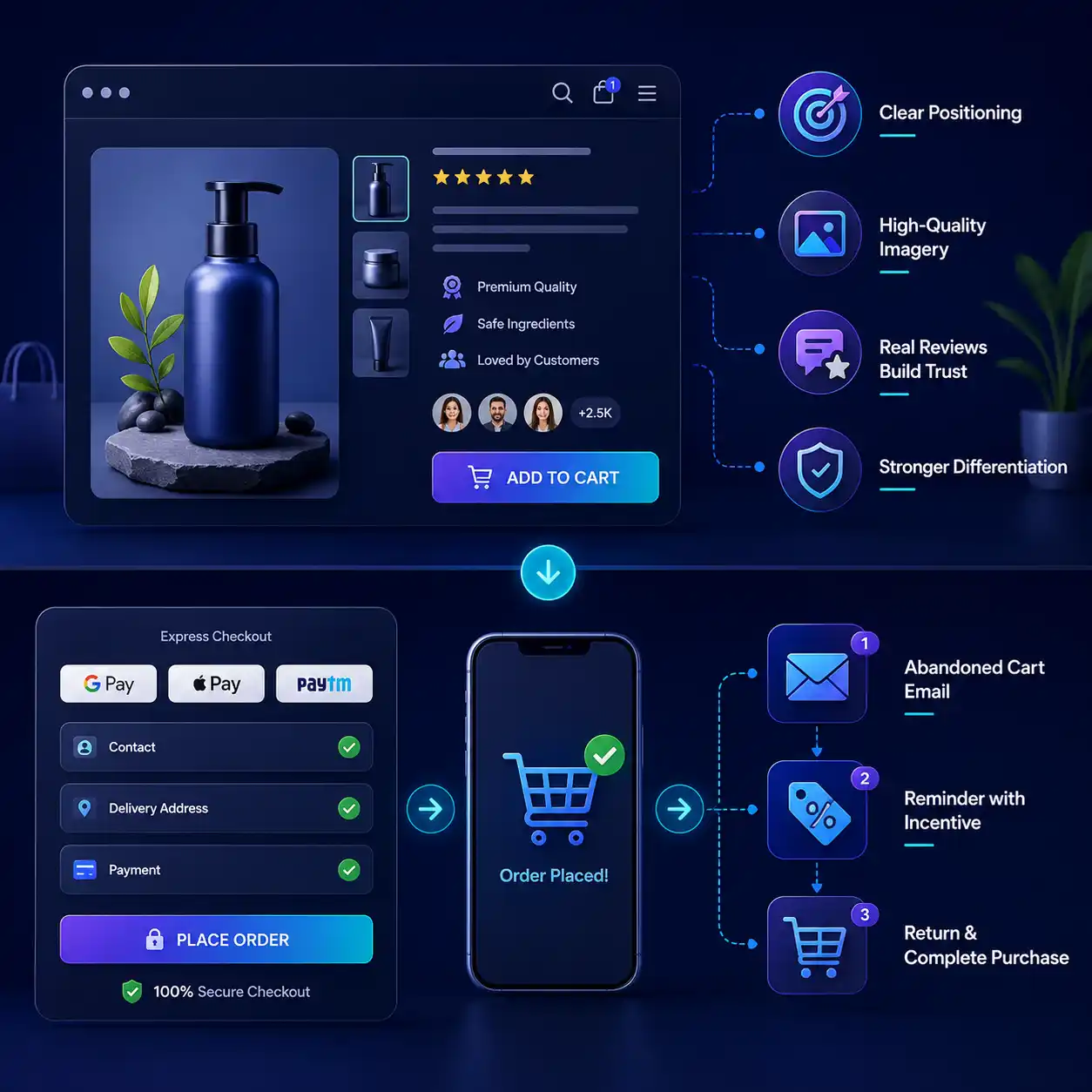
For D2C Brands
A smaller catalogue means each product page has to do more work — storytelling, imagery, reviews and clear differentiation from cheaper alternatives.
Checkout is kept as short as possible, with abandoned cart recovery and remarketing wired in from launch.
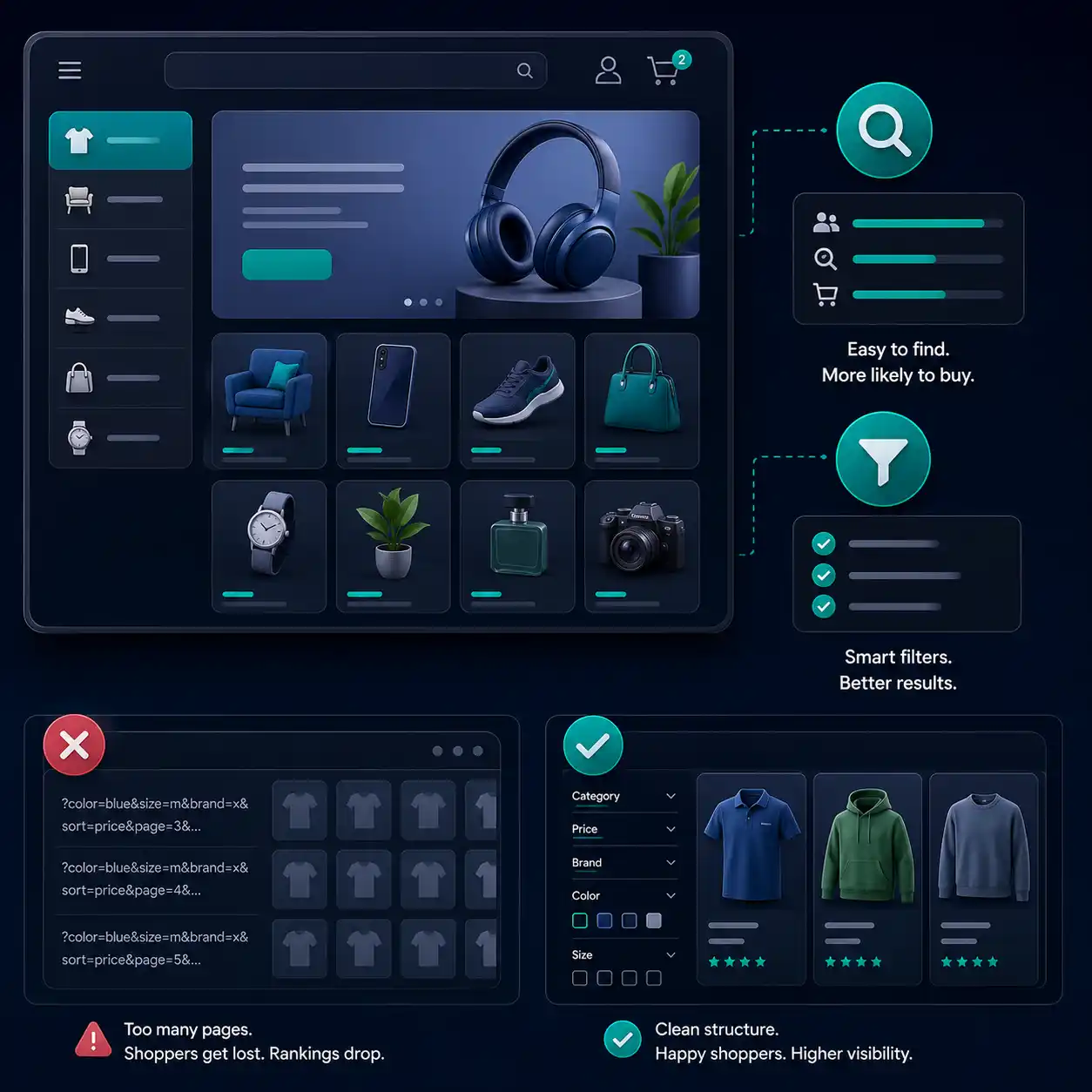
For Multi-Category Catalogues
With large inventories, navigation and search become the primary conversion problem. Shoppers who cannot find a product do not buy it.
Faceted filtering needs careful handling so it helps shoppers without generating thousands of crawlable near-duplicate URLs.
How Does an E-Commerce Project Work?
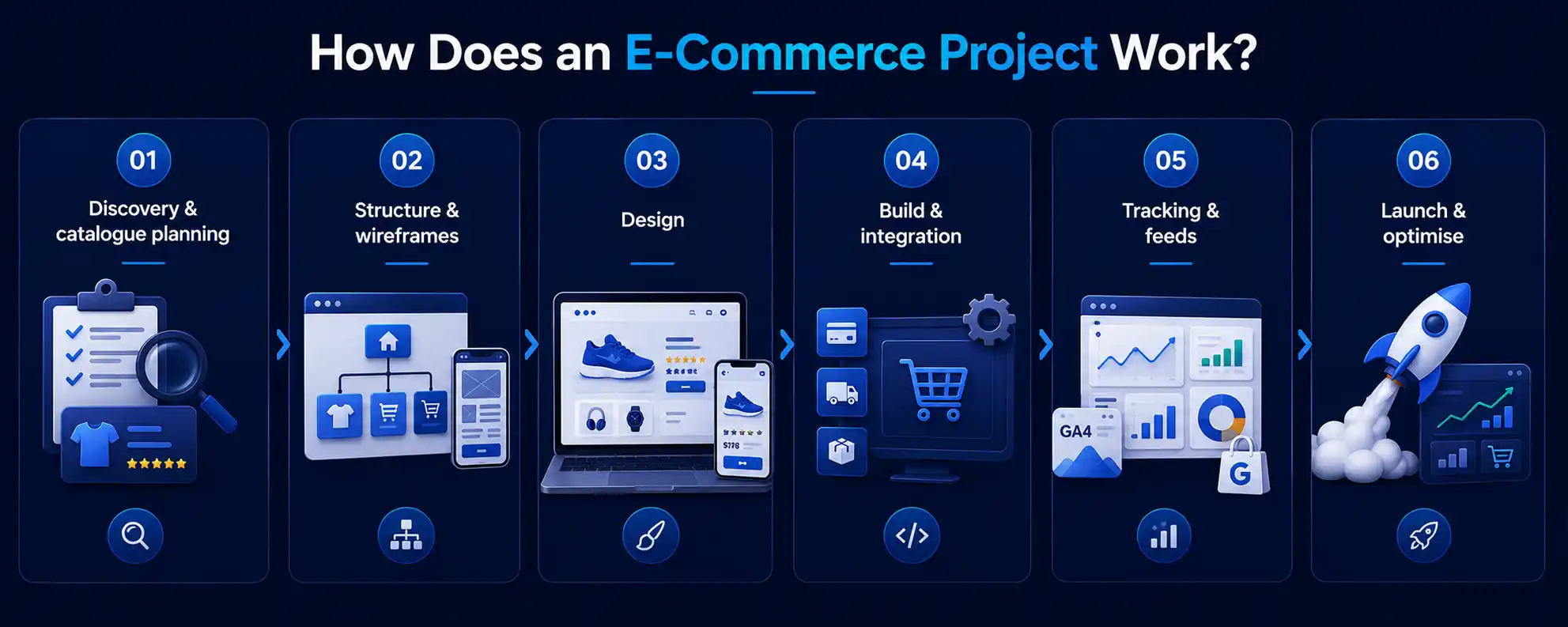
Discovery & catalogue planning
Understanding your products, categories, variants and how customers expect to browse them.
Structure & wireframes
Category, product and checkout flows agreed before design, since these decide conversion more than visuals do.
Design
Store design applied to the agreed structure, reviewed on mobile first given where most orders originate.
Build & integration
Store development plus payment, shipping and inventory integration, each tested with real transactions.
Tracking & feeds
GA4 e-commerce events, purchase conversions and Merchant Center feeds configured and verified.
Launch & optimise
Deployment with redirects where migrating, then continuous work on checkout and product pages.
What Affects E-Commerce Development Cost?
Store pricing depends on catalogue complexity and integrations far more than on page count. The main factors:
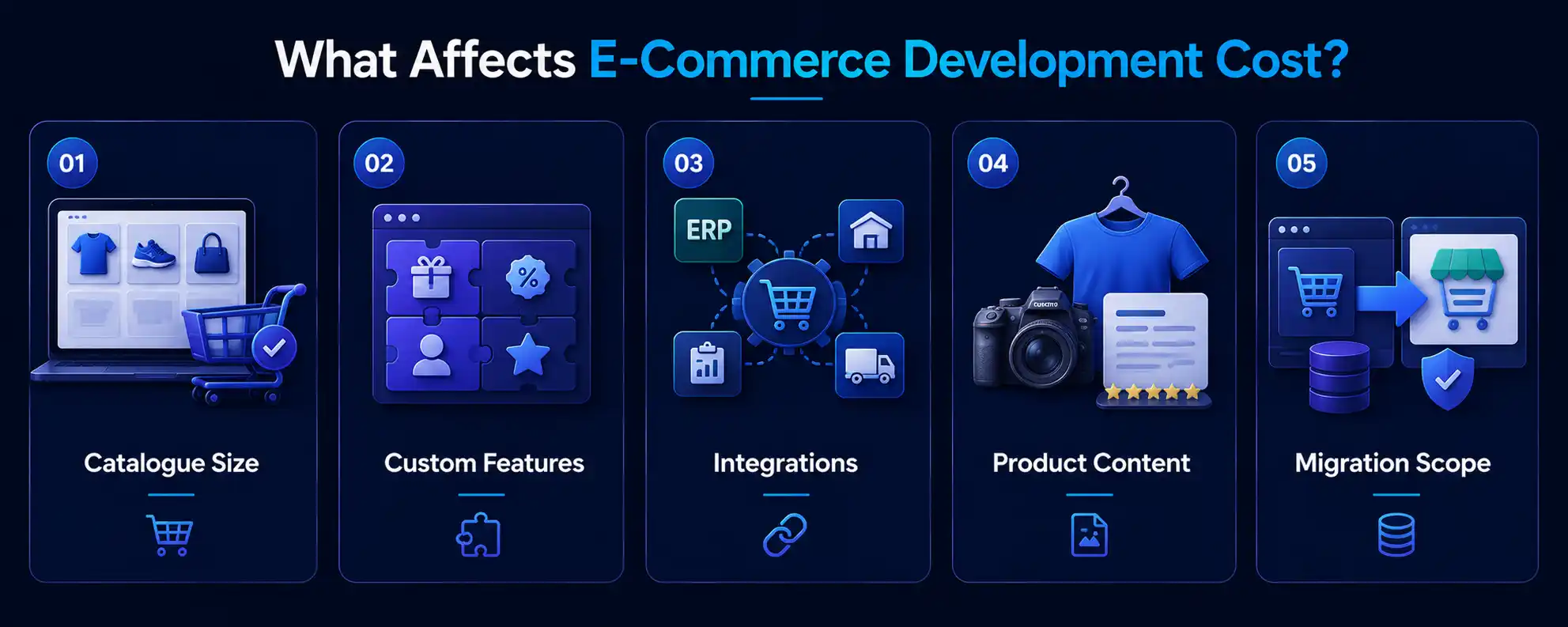
Catalogue Size
Products, variants and categories drive setup, template and testing effort significantly.
Custom Features
Subscriptions, bundles, configurators and loyalty programmes each add development and testing.
Integrations
ERP, inventory, accounting and courier connections vary enormously in complexity.
Product Content
Whether images, descriptions and specifications exist already or need producing.
Migration Scope
Moving platforms adds data migration and redirect mapping to protect existing rankings.
We scope each store against your catalogue, integrations and content readiness, then quote a fixed price before development begins.
Get A Custom QuoteHow Do You Measure E-Commerce Performance?
Every store we build is tracked through the full purchase funnel, so drop-off can be located precisely rather than guessed at:
Why Choose Ktech for E-Commerce Development?
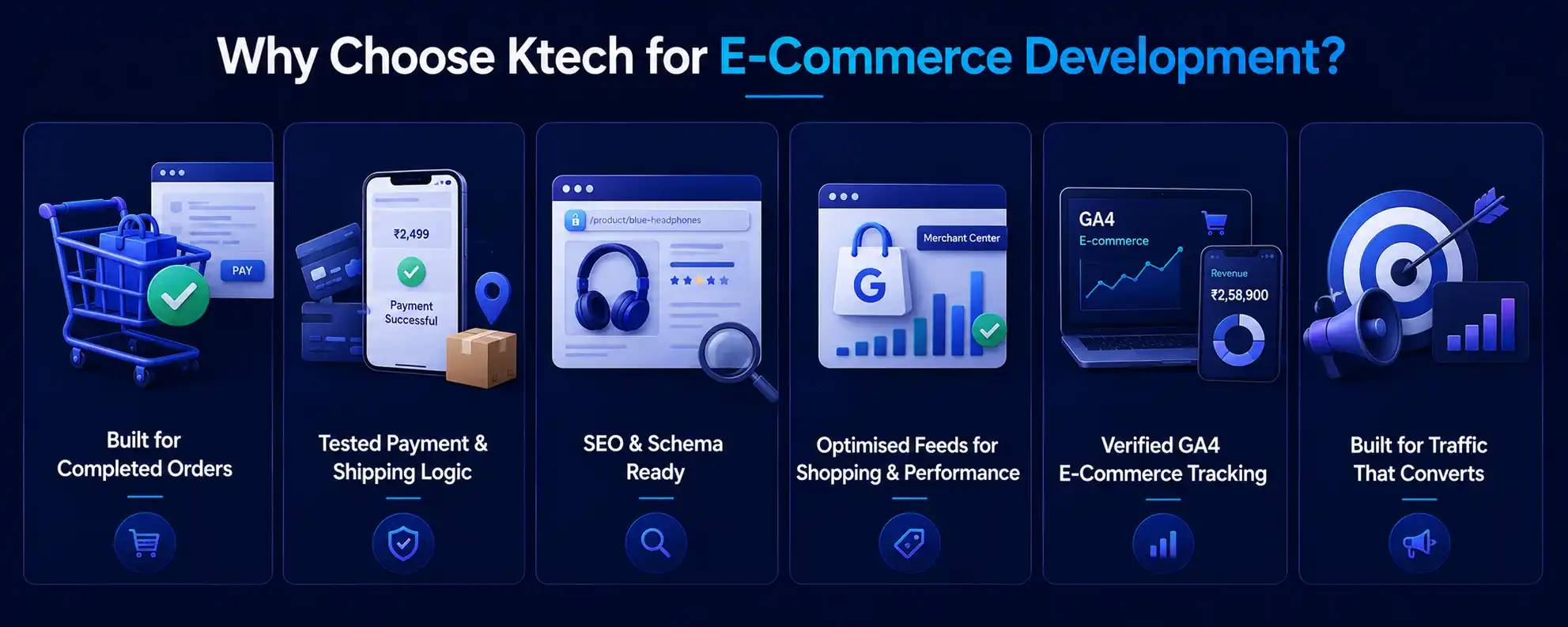
Stores are built around completed orders, with checkout friction treated as a first-order design problem.
Payment, shipping and pin code logic are tested with real transactions before launch, not assumed to work.
Product schema, clean URLs and crawlable navigation are included, so the catalogue can rank organically.
Merchant Center feeds are structured properly, which directly affects how Shopping and Performance Max perform.
GA4 e-commerce tracking is verified end to end, so revenue in your reports matches revenue in your account.
We also run the ads driving traffic to the store, so the build accounts for how that traffic will actually arrive.
Frequently Asked Questions
It depends on catalogue size, integration needs and who will manage it day to day. We recommend based on your situation rather than defaulting to one platform, and we will tell you when a simpler option would serve you better than an expensive one.
Yes. Migration covers product data, categories, customer accounts and order history where the platform allows, plus redirect mapping from old URLs to new ones. Skipping redirects is the most common way stores lose rankings during a replatform.
Yes — cards, UPI, wallets, net banking and cash on delivery. COD in particular needs careful handling around serviceable pin codes and order verification, since it carries higher return rates.
A focused store with a modest catalogue typically takes six to ten weeks. Larger catalogues and custom integrations extend that. Product content — images, descriptions, specifications — is usually the critical path rather than development.
Yes, and it is built mobile-first. Most shopping traffic arrives on phones, so checkout is designed and tested there before desktop rather than being adapted afterwards.
Yes. We structure the Merchant Center feed as part of the build, because feed quality — titles, images, attributes, availability — affects Shopping and Performance Max performance as much as bidding does.
Usually. We audit the checkout flow to find where people drop off, then address the causes — page speed, forced registration, unexpected shipping costs, or too many steps. It is generally cheaper than buying more traffic.
Yes. Stores need ongoing attention — a broken checkout or payment failure costs money for every hour it goes unnoticed, so monitoring and rapid fixes matter more here than on a standard website.
Yes. Andheri East is one of several industrial corridors we work in — we build online stores for manufacturers and exporters across Mumbai and nationally.
Yes — this is a common requirement for manufacturers and exporters, and it needs different logic to a standard consumer checkout, which we build in specifically.
Yes. We're based in Borivali West, on the same Western Line, and happy to visit or host a meeting.
Related Services
These work alongside this service and are often scoped together:
Catalogue, lifestyle and model imagery produced at scale.
Google Ads management servicesSearch, Shopping and Performance Max campaigns measured on cost per lead.
Conversion rate optimization servicesTurning the traffic you already have into more enquiries and sales.
Meta Ads management servicesFacebook and Instagram campaigns led by continuous creative testing.
E-commerce and retail digital marketingGrowth work for online stores and retail brands — traffic, conversion and repeat orders.
Build Your Online Store
Tell us what you sell and where your current store is losing orders. We will scope the build and quote a fixed price.